Wednesday, July 29, 2009

The Wonder Years


Hello all.


If you take a good look around you at any given minute of your day, there is bound to be some reminder on hand that we are living in the golden era of the mega-consumer era. If you stop and think about it, the significance can really floor you. I mean, humankind has been striving for thousands upon thousands of years, through heat and cold and malaria and wild animal dodgings and the like, to arrive the species at where it sits today. And what a well-stocked world we live in! Through the wonders of capitalist exploitation and the fashioning of globalized neo-Silk Roads capable of giving the people of Nowhere, USA, the best of South Korea and/or Ghana in 24 hours or less, the handicrafts and foodstuffs of a millennia of human sweat and strife have been layed wide open for the world to consume. From buffalo skins to digital watches to happy meals, the goods of every corner of the globe have been mass produced and mobilized and enabled to reach our doorsteps in a timely and cost-effective manner (granted that you reside in the correct tax bracket). SPOILER: If the sarcasm of the past few sentences was a little too subtle or you're busy Facebook chatting as you casually read this, allow me to put it into no uncertain terms: there are massive and pressing problems with the systems we take for granted, and god willing we will make some much needed changes in the near future. But this post is for humour alone (note the witty insertion of global export Queen's English), so carry on. Right. Now, while the activists and socially conscious nay-sayers amongst us will always be ready to interject with some nonsense about child-labor or equal distribution of wealth, I for one can see an upside to the situation we currently reside in, and this post is to bring light upon it, to illuminate it if you will, which in some cultures/languages means to shed light on a subject and/or idea, which I suppose works just fine in English as well. So forget about any and all issues you may have with the global capitalist order for a moment and consider this: Nutella.

That's right, Nutella. Created in Italy during the Second World War, now exported world-wide, and chock full of hazelnutty goodness, Nutella is quite possibly one of the most amazing food products known to modern man. Rich, creamy, nutty, chocolatey, sweet and yet subtle, Nutella is one of those foods that you eat right before exclaiming "damn" in a loud voice to anyone who will give you an ear to do so. Nutella is divine, a food of the gods, and it's mysteries are hitherto unplundered. It's good on most anything, really. Cookies? Check. Toast? Hell yes. Chocolate bars? You better believe it. And what about on a spoon already covered in peanut butter? Amazing, and just a little bit arousing. I've been eating so much Nutella lately that my teeth hurt just thinking about it, which makes me want to consume more of it. And to think, in India of all places. Until a year or so ago, I was unfamiliar with the taste of this ambrosial delight. Yes, I had seen it on grocery store shelves in the past, or heard of people singing it's praises. But to each their own in their own time, and my time just happened to be in Jaipur, India, about as far away from the main centers of Nutella consumption as one can get. I mean, Europe? Yeah, they're nutty about it, especially in France, Belgium, etc. My peeps in NYC told me about it previously. And I heard it's la bomba in parts of Latin America. But I had a moment, which changed my snack/dessert mindset forever. Here's what happened, in brief:

April and I walked down to Big Shopper in Raja Park, a chain grocery store in our neck of the woods that's the equivalent of Ralph's, Whole Foods, and Central Market rolled into one, and then dropped in India: it's not terribly dirty, they have a decent selection of stuff, and it's over-priced. Anyhow. Peanut butter was on the agenda, a staple food back home that I've been missing like mad here. April had just gotten back from a week in France, and as we passed a lone container of Nutella on a half-barren store shelf, we said to ourselves, "What the hell?", and we went for it, despite the steep price tag: $5 American, a princely sum for any food product in this country. You can purcahse 5 kilograms of wheat flour for less than that, which will make rotis and chapatis for two months for three to four people, and don't get me started on vegetables: we're getting screwed royally by the grocery stores back home, every day of the week. Anyhow, we had a moment of opulence and ability and made the purchase. What the hell, sometimes it's nice.

So we got home, and took out some Hob-Nobs biscuits from the pantry (another amazing product of the globalized world economy: the best British digest-a-biscuits that rupees can buy), and the newly purchased peanut butter and Nutella. It was at this point that I had my first spoonful of the delectable deliciousness of Nutella. I was blown away. Forcing a stream of explicatives from my chocolate and hazel-nut smeared lips, I downed some more. God, it was good. Phenomenal, really, and damned tasty. At some point, I had to stop myself, lest it all be consumed in one sitting. An hour later, I came back for more, and basically have been doing so for the past week. I'm crazy about it. Hence, this blog post.

Now go eat some Nutella, and do your part to support global capitalism. In a bygone era, it was only the Italians who had such privileges. But remember, there's always an upside to every situation, and in this one, the sweet chocolatey fantasticness of Nutella is it.

Sunday, July 26, 2009

Paging Dr. Bakra

Hello all.

Well, I landed back in Jaipur last weekend after a successful week or so of solo touring via train, foot, and bus. April and I met back up in Delhi last Saturday, and after a morning spent sipping coffee and listening to doo-wop in a faux American 50's Diner in the middle of New Delhi, we hopped a bus back here to Rajasthan, which has been surprisingly mild in weather all week. I've been getting status reports from home, and it's true: Texas in the summertime is as hot as if not hotter than North India. So put that in your pipe and smoke it.

So I managed to get some sort of funky sinus infection this week, which has had me feeling pretty janky on and off. Normally, I'm all about rest, liquids, and daytime television in these scenarios, and prefer to let my body handle itself without the additional application of modern pharmaceutical technology. However, here it's kind of imperative that I'm on my toes at all points what with homework and monkey dodging and whatnot, so I decided what the hell, I'll go to the doctor. It will be worth the experience in the long-haul anyhow.

We walked down to the little hospital by my house, and I checked in. The doctor's fees (paid up front) were roughly equivalent to $3.50. Nice. We sat in the waiting room for about 30 minutes, until Dr. Bakra called us into a cramped side-room that was momentarily devoid of patients. He asked me what the deal was, I told him, he nodded as if he knew all along what all my symptoms were, and then got to the prescribing of medicines. A long list, indeed! For a simple cold, basically, he prescribed something like 6 different medicines ranging from antibiotics to mentho-rub to vitamins. I got the feeling that the hospital stood to make a little money off my momentary lapse of vitality, so when we got down to the pharmacy (a brick room, outside of the hospital, with a tiny window that had about 10 guys sticking their heads and hands into it at once), I opted for the antibiotics and the mentho-rub exclusively. The pharmacist gave me a puzzled look; I was turning down modern medicine and all of it's miraculous healing power? No, I explained, I'm just a little too strapped for cash to be quite that ill, plus my bag wasn't quite big enough to take home all the medicines I didn't really need. Funny, same situation in every country, apparently.

Anyhow, I'm better now. And we have had a really delightful weekend, just doing some shopping around the old city, sipping coffee and eating weird sweets for Teej this week. April and I had our picture put into the paper again this week because we happened to be out in public and white at the same time (the third time for both of us, in different papers). I'll post pics when I get them scanned. So, hmm, that's about it for the time being. More soon.

Friday, July 17, 2009

Leaving Trains and Homecomings in Northwestern India


Hello all.

20 some odd hours ago I hopped a train in Varanasi and headed back here to Delhi, where I now sit in air-conditioned comfort at a guesthouse in Defence Colony. Some reflections on the past week.

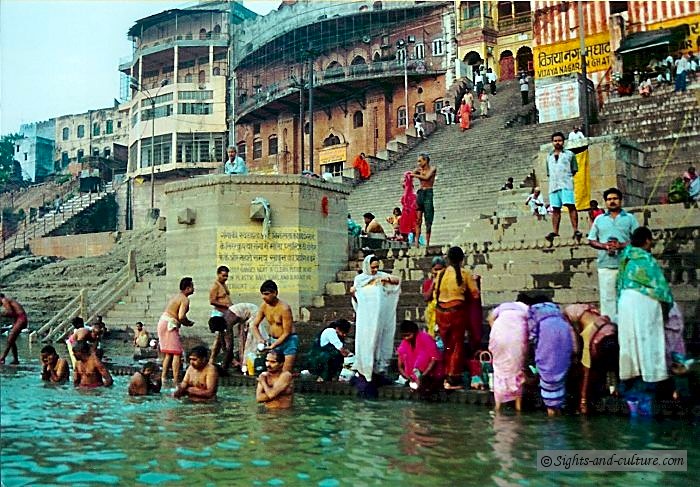
Benares is, and surely always has been, an intense place. That being said, I'm going to miss it quite a bit, I think, until I can get back to that part of the country. What a strange and unique place. The bustle is so present, the history of the place is suffocating, all is crumbling down to the ground, and the city seems to teeter on the edge of consuming itself at any second, like the serpent eating it's own tail. It's halfway there already, but again, like much of India that I've seen, it exists in this strange sort of half chaos that is at once maddening and relaxing: This is life, human life and society, at it's most pressing expression, and it reminds me that the reverse culture shock is indeed coming, when I return home in a month only to find that the usually unnoticed sterility and compartmentalization that organizes so much of our "developed" culture is in fact quite cut off from the livewire of human existence, in some suspended animation saught between television advert and museum exhibit. But that's the point I suppose; somewhere down the line back into the murky depths of histories past, our part of the world lost and/or destroyed these moorings, this dangerously beautiful mode of existence that lies closer to the lay of life and of death. In it's place we have erected support edifices that were hitherto unknown to the world and to mankind, which certainly has it's benefits: healthcare, sanitary improvements, technology, life expectancy, quality of living. But something gets lost in the translation, and you find it in developing countries, motifs and atmospheres that root backwards to lived traditions that exceed anything we could dream up, box, and ship out for sale on the boats of commerce. That being said, this time around I feel not only exhilarated to be here in this place, and taking in these special things, but also quite appreciative of the opportunities I have and the life I've landed into. But I've waxed long enough on these things, I guess.

The last full day in Benares was very nice. I had met quite a few folks from points afar; UK, France, Austria, Switzerland, USA. Some of us went to practice yoga in a little sweatbox brickroom above the clattering street. At 4 PM on a sweltering Benares afternoon, the work-out is sweat inducing to say the least, but the studio was spartan and easy to be in, and the class was challenging enough to have my muscles still telling me about it today. After, we wandered down to the Ganga and attended the riverfront aarti ceremony. I found a priest and recited my mantras, lit candles and put my little flower boat into the river, Ganga water on my forehead and the priest blessing my family to be. Dasawamedha Ghat is a particularly auspicious place to do puja for long life for husbands, wives, and children, and so I did the same, and it felt good to be there as the sun went down and the wind kicked up, the temperature dropped and the rain started to come down.

We skated off back into the old city, getting soaked, and holed up in a bakery that purportedly had food from nearly every continent. So we decided to have dinner there, which promptly took an hour to be served. Now, I for one am skeptical of non-Indian food in India; some of the worst meals of my life have been Indian attempts at world cuisine. So I stuck to sabzi and rice and was happy to have done it. The British guy with us did the same, knowing the score as well. One of the French girls ordered a cheese/veggie/baguette plate, a sure-fire disappointment in the twisted and dirty lanes of Kashi, or anywhere else outside of France for that matter. It came, and all agreed that the cheese was quite rotten or rancid or whatever, and so she refused to pay and loudly proclaimed so in English. The poor cooks in the back didn't seem like they were having any of it, though, and I for one wanted no part of any attempt to leave without paying for something in this country; the policemen carry rather large sticks and like to use them whenever possibly, especially on spoiled uppity foreigners who walk around like they own the place. Not saying this was the case here, the plate was expensive and the food on it was really quite bad, but let that be a lesson to anyone who has questions: don't order anything too far out of left field in this country, and you'll do just fine.

Anyhow, so I was first in line to split, knowing what was coming, and of course the waiters came running into the street after us yelling about being shorted 150 rupees, but I was well ahead by that point, trying to get past the police posts before they decided to start "questioning" the foreigners (i.e. hitting us with sticks). Luckily, though, the maze-like streets of the old city are easy enough to escape into, especially at night with the frequent power outages that plunge everything into pitch black darkness.

So That about wraps up the trip to Kashi, the Luminous City, and now sitting back in Delhi, I'm about to eat some lunch and then take back to the streets, go check into the hotel, and arrange a car to pick up April from the airport tonight. I'm so excited to see her, it's all over my face. As you all know, I am crazy about her, and I look forward to her return tonight. More soon.

Tuesday, July 14, 2009

City of Light and Darkness


Hello all.

So today was my first day in Varanasi and this place exceeds all of my expectations about it. It's hard to imagine a more urgently present city than this one; I'll try to get some of it across via the printed word.

This city is wild beyond all compare. The old city is like a maze, with tight alleys full of people and cows and shit, temples on every corner with the gods silently gazing into the street, huge water buffalo sauntering down alleys so tight that they barely fit into them and causing massive traffic jams. The monkeys rule the eaves above your head, occasionally tossing things at passerby, plant life is growing in every crevice. No cars, not even autos can reach the inner city, it's all foot traffic, and the place looks like it could fall to pieces at any minute but every inch hums with life and energy. The whole place looks ancient, but in reality I think the very oldest of the buildings is probably around 400 years old or so, but sitting on and in ruins much, much older. Varanasi is reputedly one of the oldest continuously inhabited cities in the world, with people living here for at least 27oo-2800 years. And at times one can imagine things as they used to be before our modern, globalized age; especially during one of the numerous rolling blackouts that happen in the evenings, when the narrow alleys go pitch black and the streets are lit by candles and torchlight. One could get lost in the cramped, dirty maze of the old city for seemingly days on end, and everywhere one lays eyes, there is something exotic and amazing to see.

I awoke at 4:30 AM today to take one of the fabled sunrise boat rides on the Ganga. I walked down the narrow lanes of the old city towards the ghats, and all was quiet and still in the pre-dawn glow. We arrived at the water's edge, descended the steps and got into the boat and shoved off. The view from the water of the ghats slowly rolling by is something special to behold. The morning bathers were coming to the water's edge as they have done for centuries, the burning ghats that constantly cremate bodies on the waters edge, the temples and high buildings around them smeared with ash and soot, the yogis and sadhus with their golden bowls filled with Ganga water, some of them smeared with ashes from the cremation grounds, the sun slowly rising across the wide plain to my right.

After, I visited some of the more antiquated and vibrant temples in the area, and got lost in the old city for a while. Then it was off to Sarnath, 10 kilometers away, to see where the Buddha preached his first sermon and officially started the Buddhist faith. The main stupa there is reputed to hold bodily relics of the Buddha himself, and is an important Buddhist pilgrimage site visited by people from all over the world. In true Indian archaeological site fashion, I climbed unhindered to the top of a 2000 year old stupa and looked at across the Gangetic plains; the monsoon was rolling in and the skies were blackening. It poured and the lanes and alleys filled up with water, everything washing eventually back into the mother river.

Now to leave the internet and the 21st century behind and wander my way back to the guesthouse in the pitch black. But I'm not alone, and I can feel the eyes of Varanasi on me as I walk, and it's true that those who come here really do find what they are looking for, even if they didn't know what it was in the first place.

Sunday, July 12, 2009

Crossing the Ganga


Hello all.


Two things. One, I'm quite impressed with the Haridwar/Rishikesh area generally. It's a really fascinating place, especially given it's status in the cosmology of the Hindu worldview. The town of Haridwar and all surrounding enviorns are alive with tourists and pilgrims come for thier chance to bathe in the Mother Ganga, participate in the huge puja on the ghats, and do walking pilgrimages of the surrounding sacred sites. The energy is in the air, and the people (if you speak the slightest bit of Hindi, especially) are among the most welcoming and accomodating that I've met anywhere in the country. Two, Western tourists to India are a strange and complex lot. First, the tourists.


I first noticed this last year when i was living here previously, and visiting sites both sacred to Hinduism and central what to the Western pre-conceived notion of India "is", I've found that the Western tourists I have encountered are (generally) pretty easy to read. I took this observation today when I was passing a beaded ghora (whitey) in Rishikesh, and when we locked eyes (hesitantly, accidentally), I smiled, and he averted his gaze without emotion. Now, perhaps I'm generalizing a bit, but most of the many, many foreigners I have come across in India have come off to me the same way. If you happen to run across them, there's never any back and forth, never any acknowledgement. It's like the fact that there are other white people that travel and live here just blows their whole experience. A disclaimer: hold your objections if this hasn't been your trip here, remember that this is my blog and I'm doing my own personal musing based on my own experiences.

For many in the west, India is one of those places that you were drawn to for a reason. You don't just happen to go on vacation here, you come with an idea in your mind as to what this place represents and what it 'is', like it or not. Thank the Western counter-culture of the past 50 years, but everyone has a pre-ordained 'idea' of what this place is about, for whatever reason. And, I think, for a lot of people what this place actually is and what they think it should be doesn't really jive. This really shines through when you come to these types of places, where seekers and "spiritual" enthusiasts have been drawn for generations. India, the tangible, living and breathing mass of humanity that comprises this place, is out there, and yet it is hard for those of us from places far afield to digest sometimes; admittedly, even I was originally drawn to the academic study of this region because of a yoga practice and an exotic notion in my head of a place that was completely counter to the Christian white-bread world I was brought up in. I dreamed of going to a place where the people were all so "spiritual", and where the experience was somehow removed from reality by virtue of distance and cultural boundaries. Then I started learning about this place from other types of books than those printed by yoga publication trusts, and finally, from real people on the ground in this place. So I'll be the first to admit that my own exoticist ideas have bled from my mind slowly, and that the process is a continuous one. Luckily, my experiences here have been in school and in other types of situations than that of just wandering and seeking something too ephemeral to grasp, and something so placid and atmospheric so as to have been created by my own imagination. Again, this isn't so much to slam that kind of experience; it surely has it's validity and to each their very own. So it is for all who travel here; their conceptions come with them, and although each experience is different, I think it is nearly impossible to leave this place with the same type of mental geography intact. What is it that always accompanies the traveler? Learning. India is everything it is said to be, and it is nothing it is said to be, but in all it is one of those places in the world that has been created both by the imaginations of others outside of it as well as by the pulsing humanity of those that live here, that re-create it and sustain it daily. So if you're visiting here, and you run across a fellow visitor who happens to be the same skin tone, just remember that whether you like it or not, you are of similar place, mindset, disposition. And smile! You're traveling. I'll spare you all the rant about the holier-than- thou whitey new-agers who think they own the place because they can touch their feet to the backs of their heads, memorized a Sanskrit mantra and bathed in the Ganga--save it for another posting, I've got a train to catch.


Randomly, I was walking by the river today and took up an offer to head up to Lakshmanjhula. So I hopped in the flat-bed with some young guys dressed in ochre and went up to the foothills of the Himalayas, to the sprawling little group of towns collectively known as Rishikesh. It was beautiful, but poured buckets (the monsoon is on in full force), so I holed up in a temple with a Brahmin priest and a betel-chewing passerby and discussed the recent Mahabharata television serials for an hour or two. It's pretty exciting, my Hindi is getting good enough that I can converse with some manner of ease (at my best moments), and can listen to people and get a good bit of what they are saying. Rishikesh is really nice, and the Ganga flows fast and hard out of the mountains here. I crossed the huge suspension foot bridge, saw the aashrams on the hills, put my feet into the cold river until I got chased out by the storms. Coming home, we packed 15 people into a six seater vikram and sang songs as we drove back to Haridwar in the sheets of rain, and I was happy and full of life and so were those around me. One young guy was so overtaken with the moment that he climbed out of the speeding rickshaw and sat on the roof in the pouring rain, singing songs and praising all of existence. Those in the vikram with me agreed: it was a wonderful moment.


I'm cutting this short, as my train to Benares leaves in a few minutes. Hello 15 hour train ride. More soon from the plains of North India.

Saturday, July 11, 2009

Wandering North India and the Omnipresent Spectre of Drew Thomases


Hello all.

So I've been here over a month now, and have exactly four posts up to date. Not the best track record, but hopefully you're still tuned in. If you are, read on.

Just as Robert Smith once crooned, Jaipur has been hot, hot, hot, but we've been making due and we recently acquired a new/used swamp cooler to try and dampen (literally) the blow of the nighttime heat. It's been helping, surely, and the Indian summer is nothing to understate, but I've been getting reports from back home (Texas) that the temperature has been comparable to within 5 degrees or so most days. Ouch. It's been between 110 and 115 here most days, so do the math.

A quick note before I launch into the day's events. Little does he know, but Jaipur and indeed large swaths of Rajasthan are host to the lingering spectre of Drew Thomases. Thomases, or "Munchwallah" as he is affectionately known locally, is a grad student from Columbia who lived with me at the Raj Garden flat last summer, the same flat I currently inhabit once again. Drew stayed on and did the year long Hindi program in Jaipur after the rest of us went home last year. He has since returned to the States. I began to notice early on this summer a large number of queries as to Drew's whereabouts, especially in Raja Park, our old (and my current) stomping ground. Not surprising; Raja Park is a fairly small place and Drew is a noticeble guy, especially with the mustache ('munch' in Hindi; hence, 'munchawallah', the mustachioed one). So no big deal. But I hopped a rickshaw in the Old City the other day, completely randomly, and the driver asked me if I knew Drew. "Sure," I said, "I lived with him." Strange, but still Jaipur, isn't the biggest town in India. Then it happened again, same situation: a random rickshawwallah in another part of town asks me, of all people, if I know Drew. Now I'm starting to wonder, am I being tailed here? What's happening? Then April and I went to Pushkar, and this was the doozy, someone in a town 200 kilometers away from our own asked me if I knew Drew. Cue Twilight Zone theme song. But that's not all.

So we tried to get wireless internet hooked up in the apartment, so we called an Airtel representative, he came out, I filled out the forms, dropped the deposit and the first months rent, and he split. Then the hook-up guy didn't show for two days, and we called, maybe about some oversight or something. The original guy came back over and started explainging in Hindi that one Drew Thomases (and company) "forgot" to pay their last wireless bill, and as such the Airtel people can't hook up wireless in the apartment again until somebody pays up the (rather large) difference. We all arued for a while, but nothing doing, so we requested a refund for the 2000 rupees we paid ($50 or so), which of course before we paid, we weren't informed about this little problem. Now, a refund check is supposedly in the mail from Delhi, and the ghost of Drew Thomases has begun, poltergeist-like, to physically affect the world he left behind. Anyhow.

That being said, things go pretty well. April took off for France yesterday, and I was certainly sad to see her go. She's performing in the south of France all week, in Biarritz, with her dance troupe. Lucky. I wish her well, though, and miss her very much.

So I decided also to do some traveling, and last night I jumped a bus northwards towards the Himalayas. I won't quite get to the snow caps due to time constraints, but I landed here in the foothills, in Haridwar, which is a really great little town. The bus ride ran about 15 hours or so, but it wasn't so bad. Haridwar is a particularly holy city within the Hindu cosmology, and one of the holiest places along the Ganga (Ganges) for living relatives to bring the ashes of their deceased loved ones to deposit into the river, which in Hinduism is considered a living goddess that sustains the life of the land. It's especially popular with people from my neck of the woods (Rajasthan) due to proximity, but people from all over are constantly coming and going into the city. Every night, there is a large aarti ceremony in which people line up along the ghaats (steps into the river) and put lighted lamps into the swift current. Songs are sung and music is played, and all in all it's a beautiful experience. I went to the ceremony tonight, did my puja and recited in Sanskrit with a Brahmin priest, dropped flowers into the river and splashed the cool water onto my face and hair. There were so, so many people there, it was overwhelming and beautiful and popping with life. I had the priest recite a shloka for long life for my wife-to-be and any offspring that may come our way, and I went down and put my hands and feet into the river and blessed the prayer beads I had bought at a rickety little road-side stand and for a moment even my sturdily non-denominational tendencies were thrown. The Ganges is a little muddy here, having come down out of the mountains and hit the plains, but it runs fast and cool is impressive to say the least, and the spirit is infectious and I danced and sang with people I didn't know and under the massive, three-story tall statue of Shiva we made merry as he silently looked out towards the vast expanse of the Himalayas, to all those innumerable cave-dwelling sadhus and rishis and babas that keep the land holy and safe by power of their asceticism and devotion to this holiest of rivers. Coming into town by bus this afternoon, we passed a line of pilgrims walking from the town that quite literally stretched for over 40 miles in an unbroken mass of people, dressed in orange, walking in the summer heat. It must have been thousands and thousands of bodies, walking in unison, and I was glad to be here at this point on the surface of the earth, at this point in time.

Tomorrow night I leave for Benares, (Varanasi, Kashi) also known as the City of Light and the holiest city of the Hindu geography. Although I've studied the place for some years, I've never been able to get away from my studies long enough to warrant a trip while I was here, so I'm quite excited. More from the banks of the Ganga to come.

Wednesday, July 1, 2009

Pushkar, Aapka Pani Kahaa Hai?


Hello All.


I hope all has been well with you all since we last rapped at one another, or rather I rapped at you and you read about it, but whatever, you know how it goes and again, I hope it goes well. Things flow here like the river, and life washes, studies take up the lions share of my time, and the (true) Indian Summer is bearing down on us with a vengeance. The good news is that the monsoon has broken, and the rains are starting to come in sporadically. When they do arrive, the sigh of relief from the slowly roasting city is almost palpable. Sometimes in the afternoons, we can see the clouds rolling in across the western hills from our seventh-floor windows, and the whole spread of the town slowly goes blueish-grey as the clouds block out the sun, and the dust blows in our open doors and windows and swirls around in the corners of the room. From our high vantage point, nestled as we are in the eaves of our high perch over the city, it is an amazing sight. The rain's arrival also usually drops the temperature by about 10-20 degress, which is an added bonus to the visual panorama.

April and I went to Pushkar last weekend, had some laughs, took in the sights, etc, etc. Pushkar is a tiny little town west of Jaipur by a few hours bus ride. By the time you get there, the land has begun to dissolve into the scratch and dirt of the Thar, and the scrub-brush does a poor job of keeping the dust from just floating about in the air. This overall geographic disposition, coupled with the extreme lack of rain in Rajasthan generally, keeps the smell of dirt constantly in one's nostrils, but (most of the time) it is a good, earthen, clean smell. But Pushkar, right?

We hopped the bus to the holy city here in Jaipur after some terse monetary conversation with a fare-hiking rickshaw driver; to no matter, though, we got to the bus stand only to have our bus run about 3 hours late. So we found a small AC restaurant with some pretty decent dosas and pao bhaji (well, the pao was less decent), and waited around for the bus to get there already. Finally, the bus showed up and we scampered on. For the bus ride from here to Pushkar, roughly the same as a drive from, say, Austin to Houston, the fare ran us 235 rps for the both of us on a nicer AC bus, which converts to about $2 and some change a piece. Nice; prices in India can't be beat unless you're spending Euros over here: the folks from the Continent have it criminally easy in a place like this.

The bus dropped us in Ajmer, the Indian equivalent of a glorified cow-town on the other side of the mountain from Pushkar. For some reason I don't particularly care for Ajmer; there's a strange, chaotic energy to the place that doesn't jive for whatever reason. I went last year to the 1000 year old Dargah (Sufi Shrine) there, and that was quite impressive, but aside from it the town is a dessicated blip on a larger map to more interesting enviorns. Anyhow, we landed in Ajmer at the bus stand right at the evening rush hour and the place went wild, and we were the main attraction. Aliens touched down in a strange land; we might as well have had four arms and been breathing fire. Foreigners are interesting enough to the local populace in a place like this, but foreigners dressed like Indians who can speak some Hindi are cause for collapse of local transportation grids due to extreme rubber-necking--i.e., we get mobbed and stared at a lot. We waited for about 30 minutes or so, and by the time the local bus came clunking into view we had spoken, I'm pretty sure, to every one of the 5000 people in the place at least once, and every last one of them had asked roughly the same questions: "What is your country?", "You know Hindi?", and "You are married?". The secondary part to question #3 is "How many children you are having?", which of course elicits different answers depending on mood; I might start telling people we have 18 kids, just to practice using my numbers in the language.

Oh yeah, the second bus. We took the 7 rupee local bus over the hill, and it was real India in every way. We had to literally push our way onto the crowded bus; it was all din and clomor and heat but we got on and took the ride over, arms and legs and bags and bodies piled onto one another, along for the ride so to speak.

So we took the bus over the mountain, and arrived. Pushkar is considered a holy place in the Hindu cosmology. The tiny town surrounds a small lake, the waters of which are held to be purificatory in nature and divinely created and maintained. Legend has it that Brahma, the four-headed god of the so-called Hindu "trinity" (alongside Vishnu and Shiva), dropped three lotus flowers from heaven, all of which created lakes in otherwise inhospitable places in the western desert-like scrub of North India. There is of course a long list of other noteworthy theological events that have occured there as well, and I think the number of temples and cows in the town far outnumbers people and other building combined. But Pushkar is exactly how I envisioned North India to be before I actually came here. It's small, cramped, dirty and loud, filled to the brim with cows plunked down in the middle of every street and alley, monkeys on every rooftop, camels pulling carts full of turbaned men, religious pilgrims coming and going in a huge procession of color, brahmins perched in the doorways of centuries-old temples with their faces smeared with ash and saffron, and the painted sadhus sitting together on shady street corners smoking hash and begging for change with their silver bowls. Pushkar has it's drawbacks, such as the over-confluence of empty-headed, bhang-guzzling Euro-trash backpackers who walk around like they own the place; hence the glut of places named the "Pink Floyd Guesthouse" and the over-use of bad English slang by the locals. But overall it's a great place, and highly worth visiting. Crazy thing is, that when we arrived, we had no idea that the lake would be drained of water. Turns out, there is some sort of enviornmental clean-up project underway and the lake is being cleaned out from the downside up, and so the main attraction of the town is curently not in service. This makes for rough puja when the lake water is required to consecrate the ceremony. It did make for a lot less tourists though, and I for one was glad for the dearth of human trafic on the normally congested streets.

We arrived in Pushkar late, posted up at our hotel and went to get some food, which was to date the worst meal I've ever eaten in this part of the world. The problem is that we strayed too far into unfamiliar territory, and opted for enchiladas (right?) and mo-mos, which are a veggie dumpling type dish from extreme north-east India, Nepal, Tibet, etc. The enchiladas resembled some sort of stale pizza made out of dirty "bread" and wrapped around oil-slick chunks that used to be vegetables, and the mo-mos were pretty awful as well. I smuggled them out and fed them to some stray cows laying in the street, which is a very auspicious thing to do in Pushkar, so it wasn't a total loss. The next day we did a good bit of shopping and swam in an actual pool, which was too decadent to explain properly unless one has spent time in places like India. We had some adventures, nearly got trampled by a herd of stampeding cattle (literally), and argued with many people over the price of many things. Ah, but the hour grows late. More soon, classes are getting underway, and there's always another story to tell. Stay tuned.